


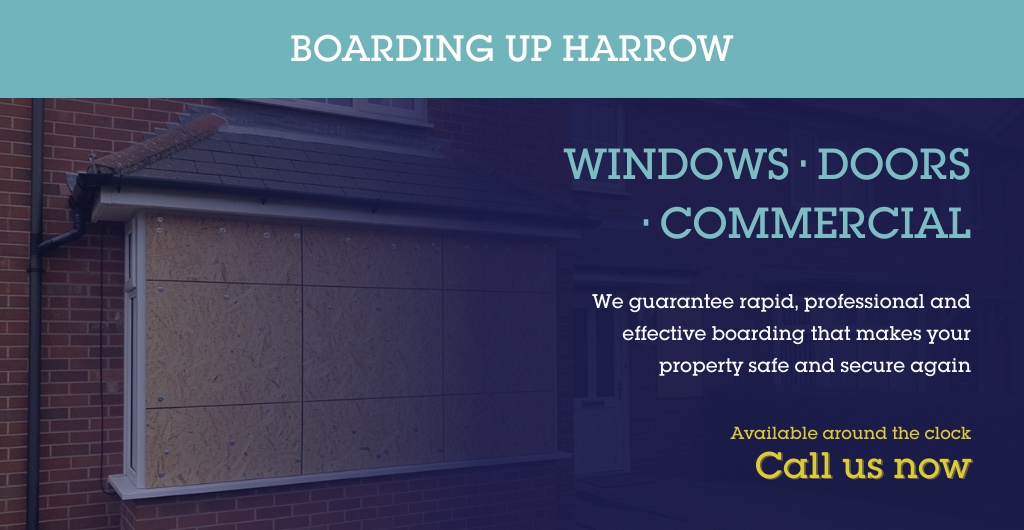
Flood damage boarding up in Harrow (HA) – securing your property after a leak or flood
Flood damage is stressful because it rarely stays “small”. A burst pipe upstairs can soak ceilings, swell door frames, and leave ground-floor windows vulnerable. Surface water after heavy rain can push debris into glazing and doors, and once water has got in, the risk of further damage, mould, and opportunistic break-ins increases quickly.
If you need flood damage boarding up in Harrow, we secure windows, doors, shopfronts, roof openings and other vulnerable points across the HA postcodes (HA0–HA9). We’re not a drying or restoration company, but we’ll make the building safe, protected and weathered so you can arrange the next steps with insurers and contractors.
Need urgent help? Call 020 4634 5472 or email us.
When flood damage happens (and why boarding up is sometimes needed)
Flooding in Harrow is often linked to internal plumbing failures rather than rivers, but the outcome can be similar: weakened openings and compromised security.
Common scenarios we see include:
- Burst or leaking pipes in flats/maisonettes (especially where water runs into communal areas and through electrical risers)
- Overflowing appliances (washing machines, dishwashers) soaking floors and swelling timber frames
- Blocked gutters and downpipes causing water to track behind fascias and into loft spaces
- Surface water and heavy rain pushing water under doors and into basements/lower ground floors
- After a fire-fighting response, where significant water has been used and doors/windows are left damaged or open
You may need boarding up after flood damage if:
- A door won’t close or lock because the frame has swollen
- Window frames or sashes are distorted, leaving gaps or loose glazing
- Double-glazed units are cracked, have failed seals, or have been knocked by debris
- A shopfront has been compromised and trading needs to stop temporarily
- You have a vacant/void property that’s now more vulnerable because of damp, warped timber, or forced access during emergency response
If you’re unsure, we can talk through what’s happened and advise whether boarding up is appropriate, or whether a different approach (like a temporary steel door or security screens) would be safer for the medium term.
What to do first after a flood (practical steps)
If it’s safe to do so, these steps help reduce further damage and make securing the property smoother:
- Stop the source of water (turn off the stopcock for a burst pipe, isolate the appliance, etc.).
- Avoid electrics if water has reached sockets, consumer units, or lighting circuits—call an electrician if needed.
- Take photos/videos before moving items, where practical. This often helps with insurance later.
- Ventilate if safe (open windows/doors only if you can remain on site and it doesn’t increase security risk).
- Keep any reference numbers (insurer claim number, building management incident log, etc.).
When you’re ready, contact us for help securing the building: Call 020 4634 5472.
How we secure flood-damaged properties in Harrow
Flood damage creates two main problems: weather exposure and security vulnerabilities. Our job is to create a strong, temporary barrier while avoiding unnecessary damage—especially important when frames are already swollen or softened by moisture.
1) Initial checks: safety, access, and what’s actually failed
On arrival, we’ll assess:
- Which openings are compromised (doors, windows, shopfront glazing, rooflights)
- Whether frames are sound enough to accept fixings
- Any access issues (communal entrances, rear alleys, shared gardens, shuttered shopfronts)
- Whether there’s likely to be ongoing damp that affects the best method (e.g., avoiding fixings into crumbly timber)
If we think an opening is too unstable for non-destructive methods, we’ll explain the options before proceeding.
2) Boarding windows: the right sheet, the right fixing
For most domestic windows and smaller commercial panes, we use:
- 18mm exterior-grade plywood for strong, secure boarding
- 12mm OSB for smaller, lower-risk openings where appropriate
We size boards properly, then fix them using suitable methods for the substrate—often with anti-tamper fixings so the board can’t simply be removed from the outside. Anti-tamper fixings matter particularly when the property will be unoccupied overnight or while drying work is arranged.
If the window reveal is saturated or fragile, we may use alternative fixing points to avoid the board pulling loose as the material dries and moves.
Related service: window boarding in Harrow
3) Securing doors that no longer shut (common after floods)
Floodwater and prolonged damp can make timber doors and frames swell. That can lead to:
- A door that won’t latch
- A multi-point lock that won’t engage
- A frame that’s twisted, leaving a visible gap
If the door is damaged but still in place, we can board to reinforce security. If the entrance is unusable or the risk is higher (e.g., repeated access needed by trades, or a void property), we may recommend a temporary steel door instead of timber boarding.
Related service: door boarding in Harrow
4) Shopfronts and commercial glazing after water ingress
Flooding in commercial premises can be disruptive: stock damage, safety hazards, and broken glazing from debris or forced entry during the incident.
We board shopfronts with appropriately sized sheets and secure fixings, taking care to:
- Cover large glazed spans safely
- Maintain safe access routes for you/contractors where possible
- Reduce visibility into the premises if the business is closed temporarily
Related service: shopfront boarding in Harrow
5) Roof openings and skylights (often overlooked after storm-driven rain)
Sometimes “flood damage” follows roof leaks—water pouring through after tiles slip or flashing fails, then ceilings collapse or rooflights crack.
We can secure exposed roof openings with boarding as a temporary measure, with a focus on weathering and safe fixing.
Related service: roof boarding in Harrow
What you get from us (useful for insurers and landlords)
We’re not loss adjusters or legal advisers, but we do provide the documentation insurers and managing agents typically ask for. After securing, you can request:
- Time-stamped photos of the damage and completed boarding
- An itemised invoice and clear description of works
- Notes on any limitations (e.g., “frame saturated/unsound”, “access restricted”) so it’s documented properly
For more guidance on paperwork and process, see insurance claims support.
Flood damage in different property types (Harrow & HA postcodes)
Harrow’s mix of housing and commercial property means flood impacts vary. We adapt our approach based on building type and how the property is used.
- Residential homes and flats: swollen timber frames, compromised locks, broken glazing from internal pressure/warping. See residential boarding up.
- Commercial premises: shopfront glazing, rear service doors, and the need to secure quickly outside trading hours. See commercial boarding up.
- Vacant or void properties: higher risk of opportunistic entry after damage, and a stronger need for anti-tamper methods or longer-term solutions. See vacant property security.
If you’re coordinating for a landlord or managing agent, we can work from access instructions and provide a clear work record for your file.
What to expect when you call
When you contact us, we’ll keep it practical. We’ll ask:
- Address and postcode (HA0–HA9)
- What’s been damaged (window/door/shopfront/rooflight)
- Whether the property is occupied or vacant
- Any immediate hazards (loose glass, ceiling collapse, insecure front door)
- Access details (keys, concierge, rear access, shutters)
We don’t promise fixed arrival times because conditions vary, but we prioritise urgent security risks and will tell you honestly what we can do.
Need to secure your property after flood damage? Call 020 4634 5472 now.
FAQs – flood damage boarding up in Harrow
Should I dry the area out before you board up?
No—don’t delay security to chase perfect drying conditions. If openings are vulnerable, we can secure first. Drying and dehumidification are usually a separate contractor/insurance step.
Will boarding up make damp or mould worse?
Boarding reduces airflow through the opening, so ventilation needs to be handled carefully. Where safe and appropriate, we can discuss options to secure the property while still allowing controlled ventilation. We’ll always prioritise security and weather protection, but we’ll be transparent about trade-offs.
Can you secure a door that won’t lock because the frame has swollen?
Yes. In many flood cases the lock fails because the frame has moved. We can board to secure the entrance, and in higher-risk situations we may recommend a more robust temporary solution via door boarding in Harrow.
Is flood damage boarding up covered by insurance?
Often it can be, depending on your policy and circumstances. We’re not your insurer, but we can provide photos and an invoice to support your claim—see insurance claims support.
I’m in the HA area but not in central Harrow—do you cover me?
Yes. We cover Harrow and surrounding HA postcodes (HA0–HA9). You can see the full list on our areas we cover page.
Next steps: secure the property, then plan the repair
Floods and leaks can take days to resolve properly, but security needs sorting immediately—especially if windows are cracked, doors won’t shut, or the premises will be empty while drying and repairs are arranged.
Need help now? Call 020 4634 5472 for immediate assistance.
Or email: info@boarding-up-harrow.co.uk
