


Storm Damage Boarding Up in Harrow (HA0–HA9)
Storm damage can turn into a security and water-ingress problem very quickly—especially when a window has blown in, a door has been forced open by wind, or roof materials have shifted and left an opening. If you’re dealing with broken glazing, exposed rooms, or a vulnerable shopfront after high winds, the priority is to make the building safe, secure, and weather-resistant until permanent repairs can be arranged.
Boarding Up Harrow provides storm damage boarding and emergency property securing across the HA postcodes, from Harrow Town Centre and Headstone to Pinner, Stanmore, Edgware and Wembley. If you need urgent help, use our emergency line.
Need help now? Call 020 4634 5472 for immediate assistance.
When storm damage typically happens in Harrow
Harrow and the wider HA area is mostly suburban, with lots of 1930s semis, bay windows, older timber frames, and mixed-use parades—features that can be vulnerable during strong winds and driving rain. Storm damage doesn’t always look dramatic; even a single cracked pane can let in water and make a property easy to access.
Common scenarios we’re called out to include:
- Smashed or blown-in windows (often bay windows or side windows in kitchens and extensions)
- Doors that won’t close or latch after the frame has shifted or the lock area has split
- Shopfront glazing damaged by wind-borne debris on busier roads and parades
- Loose roof tiles, slipped slates, or damaged soffits creating an opening into the loft space
- Skylights and roof lanterns cracked or dislodged on rear extensions
- Fences and gates blown down, leaving rear access exposed (particularly important for corner plots and alley access)
If the opening is large, or the property is going to be unoccupied (even overnight), boarding up is often the most practical temporary measure while you wait for a glazier, roofer, or insurer-approved contractor.
For urgent attendance outside normal hours, go to emergency boarding up.
First steps after storm damage (before we arrive)
If it’s safe to do so, a few practical actions can reduce further damage and help your insurance claim:
- Keep people away from broken glass and unstable areas. Don’t attempt to clear shattered glazing in high winds.
- Photograph the damage from a safe distance—especially the overall opening and any visible cause (fallen branch, displaced tile, etc.).
- Move valuables away from exposed openings and, if possible, isolate the affected room.
- If water is entering, place buckets/towels to limit internal damage, but avoid climbing or going onto a roof.
- Call your insurer early and note your claim reference when you get one. We’re not loss adjusters, but we can provide the documentation insurers typically request.
If you suspect structural movement (e.g., a bowing frame, cracking around the opening, or a ceiling bulge), tell us on the phone—this affects how we fix boards safely without making the situation worse.
How we secure storm-damaged properties in Harrow
Storm damage varies from a single broken pane to multiple openings across a building. Our aim is to secure the property quickly and sensibly, using methods that protect against both unauthorised access and further weather damage.
1) Window boarding for broken or vulnerable glazing
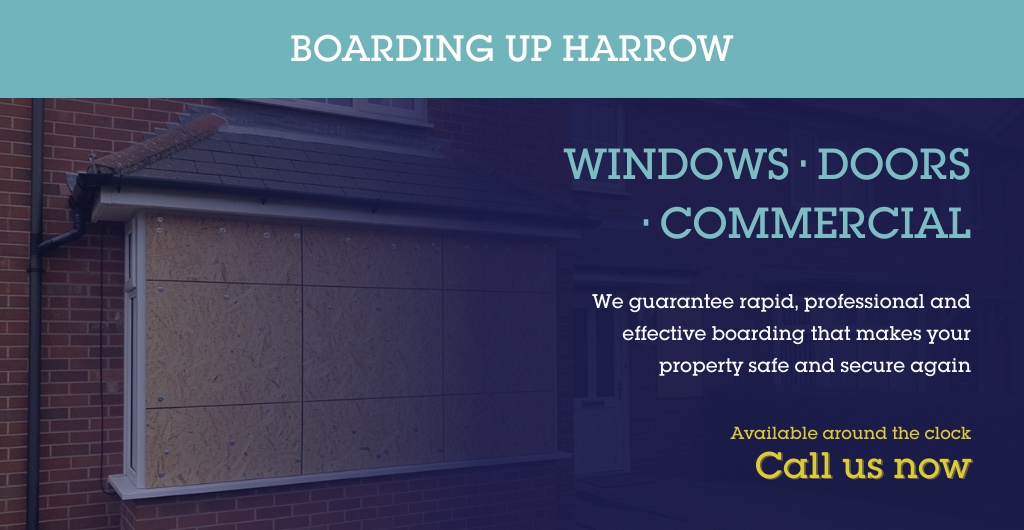
For most residential storm damage call-outs, the key issue is a window that’s broken, missing, or so cracked it can’t be left as-is. We measure the opening and fit boards to suit.
- Typically 18mm exterior-grade plywood is used for stronger protection on ground-floor or accessible elevations.
- 12mm OSB can be appropriate for smaller, lower-risk openings or where weight and handling are a factor.
- We use fixing methods suited to the substrate—brick, timber, uPVC—aiming for secure installation without unnecessary damage.
- Where appropriate, we use anti-tamper fixings to reduce the chance of removal from the outside (particularly important if the property will be empty).
If you want to understand this option in more detail, see window boarding in Harrow.
2) Door boarding and temporary security when a door won’t secure
High winds can snap hinges, split door frames, or twist a door so it no longer locks. If you can’t reliably secure the entrance, boarding up may be necessary—especially for ground-floor flats, rear doors, and side access points.
Depending on what we find, we can:
- Board up a damaged door opening safely
- Reinforce a compromised door area so it can’t be pushed through
- Discuss a more robust option if the opening needs to remain usable
Read more about the options on our door boarding service.
3) Shopfront boarding after storm-related impact
Storms can damage commercial glazing through wind-borne debris, fallen signage, or objects displaced from nearby works. Along routes like Station Road (Harrow), Pinner Road, and around Wembley High Road, a broken shopfront isn’t just a security risk—it’s also a liability issue for passers-by.
For retail units and other commercial properties, we can:
- Secure broken shopfront glazing with appropriately sized boards
- Reduce access risk while you arrange replacement glazing
- Provide straightforward documentation for your insurer or facilities team
See shopfront boarding in Harrow.
4) Roof and skylight boarding when there’s an overhead opening
Storm damage sometimes exposes the roof space—missing tiles, broken rooflights, or damage around a dormer/extension skylight. These cases need careful judgement: access and safety come first, and we’ll only proceed if it’s safe to do so.
When roof boarding is appropriate, we focus on:
- Creating a stable, fixed cover over the opening to reduce rain ingress
- Avoiding added load or unsafe fixing into weakened materials
- Advising you when specialist roofing contractors are the next step
More detail is on roof boarding in Harrow.
5) Medium-term security for vacant or heavily damaged buildings
After a severe storm, some properties can’t be re-secured with the original doors and windows for weeks—especially if frames are distorted, openings are oversized, or the building is awaiting assessment.
In those cases, we may recommend longer-term measures such as security screens or controlled access solutions. If the building is empty or between tenancies, see vacant property boarding up for what’s typically involved.
What to expect when you call us
Storm damage is stressful—especially if it happens at night or when you’re away from the property. We keep the process straightforward.
- Call and describe what’s happened (what’s broken, which elevation, ground floor/upper floor, any immediate hazards).
- Share access details (occupied/unoccupied, keys, contact on site, alarm status if relevant).
- We attend and assess what can be secured safely on arrival.
- We board/secure the opening(s) using materials suited to the location and risk.
- You receive documentation—typically time-stamped photos and an itemised invoice/work statement to support insurance/admin.
We don’t give unrealistic guaranteed arrival times—storm conditions and multiple incidents can affect scheduling—but urgent vulnerabilities are prioritised, and we’ll tell you honestly what we can do when you call.
Need urgent storm damage boarding? Call 020 4634 5472
Insurance and storm damage: what we can (and can’t) do
Many policies expect you to take “reasonable steps” to prevent further loss—boarding up can form part of that mitigation when there’s a broken window, damaged door, or exposed roof opening.
What we can do:
- Provide clear before-and-after photos
- Supply itemised invoices and a brief work description (useful for claims and property managers)
- Explain what we secured and why, in plain English
What we can’t do:
- Act as your loss adjuster or guarantee what your insurer will cover
- Carry out full repairs like glazing replacement, joinery restoration, or roof re-tiling (we secure the building)
More practical guidance is on our insurance claims support page.
A realistic storm-damage call-out in Harrow (example)
A landlord had a top-floor flat near Harrow-on-the-Hill station where strong gusts caused a rear sash window to crack and partially collapse inward. With rain forecast overnight, the tenant was worried about water damage and security because the window couldn’t be shut.
We attended, checked the frame for stability, cleared immediate hazards inside, then fitted exterior-grade boarding to cover the opening securely. Because it was an upper-floor elevation with limited external access but high wind exposure, the priority was a firm fit that reduced water ingress and prevented the opening from worsening. We provided time-stamped photos and a work statement so the landlord could pass it to the managing agent and insurer, while a glazier was booked for replacement.
Storm damage in different Harrow property types
Residential homes and flats
In Harrow’s housing stock—especially 1930s semis and flats with older frames—storm damage often affects:
- Bay windows and leaded lights
- Rear extension rooflights
- Side access doors and garage side doors
If you’re a homeowner or tenant, see residential boarding up for what we commonly do and how we keep things tidy and safe.
Commercial premises
For shops, cafés, and small offices, the main risks are:
- Public safety around broken glazing
- Overnight break-ins through compromised frontages
- Delays to reopening
If you manage premises, commercial boarding up explains how we handle access, documentation, and practicalities for businesses.
Vacant or void properties
Empty buildings are at higher risk after a storm—an unsecured opening can attract opportunistic entry. For longer gaps between damage and repair, we’ll discuss options designed for medium-term security. Start with vacant property boarding up.
FAQs: storm damage boarding up in Harrow
How long does storm damage boarding up take?
It depends on the number and size of openings and the condition of the surrounding frame. A single window can sometimes be secured quickly; multiple windows, a shopfront, or roof access will take longer. We’ll talk you through what’s realistic when you call.
Can you board up if the window frame is badly damaged?
Often, yes—but the fixing method may change. If the frame is too compromised for non-destructive methods, we’ll explain the options before proceeding so you understand any trade-offs.
Is storm damage boarding up covered by insurance?
It may be, depending on your policy and excess. We can provide photos and paperwork insurers typically request. For claim-related guidance, see help with insurance claims.
Do you cover my area in the HA postcodes?
Yes—our focus is Harrow and surrounding HA districts (HA0–HA9). If you’re not sure, check areas we cover or call and we’ll confirm.
I’m in Harrow and the wind is still strong—can you still attend?
Safety comes first. We can usually secure windows and doors even during poor weather, but roof-level work may be limited if conditions are unsafe. If we can’t complete a particular element immediately, we’ll tell you clearly and discuss the safest interim option.
Next steps: secure the property, then plan repairs
After storm damage, the best approach is usually:
- Secure the building (prevent access and reduce water ingress)
- Document the damage (photos, notes, invoices)
- Arrange permanent repairs (glazing, roofing, joinery) with the right trade
If you’re dealing with a broken window, damaged door, shopfront glazing, or a roof opening, we can help you stabilise the situation quickly and professionally.
Need help now? Call 020 4634 5472 for immediate assistance.
Or send details/photos to info@boarding-up-harrow.co.uk.
